SVC-A process flow

Bearing sourcing services for catalog numbers that cannot be guessed from a photo

Koyo bearing work is most efficient when the service path starts with the installed condition, not with a price request alone. Our process captures the bearing number, bore, shaft fit, housing fit, speed, load direction, contamination exposure and lubrication method before recommending a quote path. That keeps tapered roller bearings, needle roller bearings and deep groove ball bearings from being treated as interchangeable commodities when their clearance, cage, seal and tolerance suffixes carry real mechanical consequences.
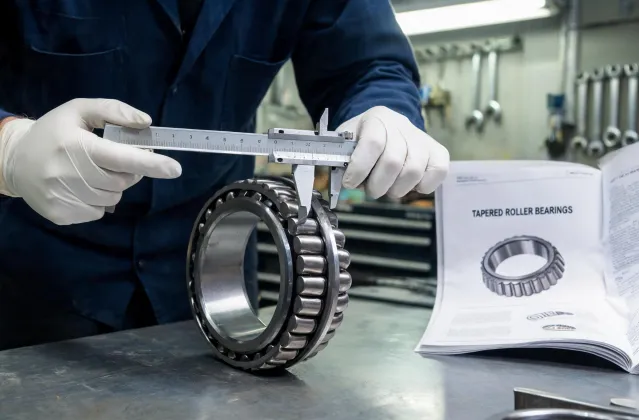
Technician checking bearing raceway

Catalog identification

We separate base series, bore code, seal format, clearance class and cage style before issuing a cross-reference. When a legacy number is incomplete, we ask for width, outside diameter, shaft arrangement and operating temperature so the substitution can be narrowed with engineering logic.

L10 life review

For applications with high radial load, axial thrust or frequent shock, the review references JIS B 1518 and ISO 281 assumptions. We do not promise impossible failure-free operation; we show what information is still missing and what safety factor should be verified.

Supply and packing

OEM lots, MRO spares and emergency replacements are handled differently. The service note can include lot traceability, grease condition, packing method, rust prevention and inspection records so purchasing can match plant requirements.

Horizontal numbered steps

Four-step engineering response

01

Read the bearing code

We verify Koyo, JTEKT or legacy Torrington references, then capture suffixes that affect clearance, seals and cage material.

02

Check the duty point

Radial load, axial load, rpm, lubrication, temperature and contamination are placed into an application note before recommendation.

03

Screen catalog options

Available series are compared against bore range, ISO 492 precision and practical stock constraints.

04

Return a quote path

The response states recommended product family, open questions and whether a datasheet or engineer review is required.

Documented scope, not loose substitution.

Every service reply distinguishes confirmed catalog facts from assumptions. That is especially important for machine tool spindles, gearboxes, conveyor idlers and automotive drivetrain repairs where small clearance or preload mistakes can shorten bearing life quickly.

Request a datasheet-backed bearing review.

Send the installed code, photos of both sides, shaft size and operating speed. A spec engineer will identify the missing details before the quote is released.